Unreal Engine 5 · MetaHumans
MetaGen
Generate realistic MetaHuman families in a single click
MetaGen is a procedural generation system for Unreal Engine 5 that automates the creation of MetaHuman offspring from two selected parents. By combining Mendelian genetics with real-time facial morphing, it generates a unique child in seconds instead of hours of manual character sculpting.
Prototype · actively in development
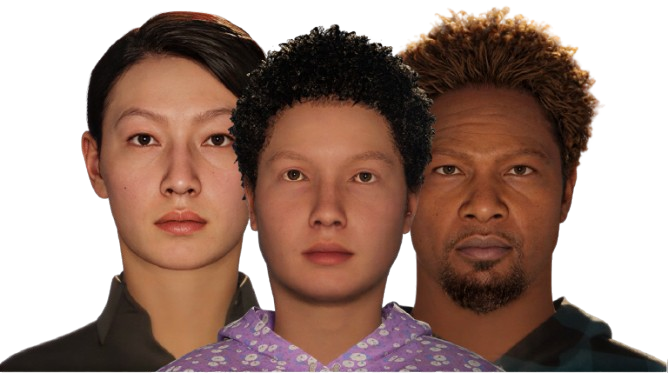
Generated Results
Believable families, generated in seconds.
Every child is procedurally generated from two selected MetaHuman parents, preserving recognizable family traits while producing unique descendants.
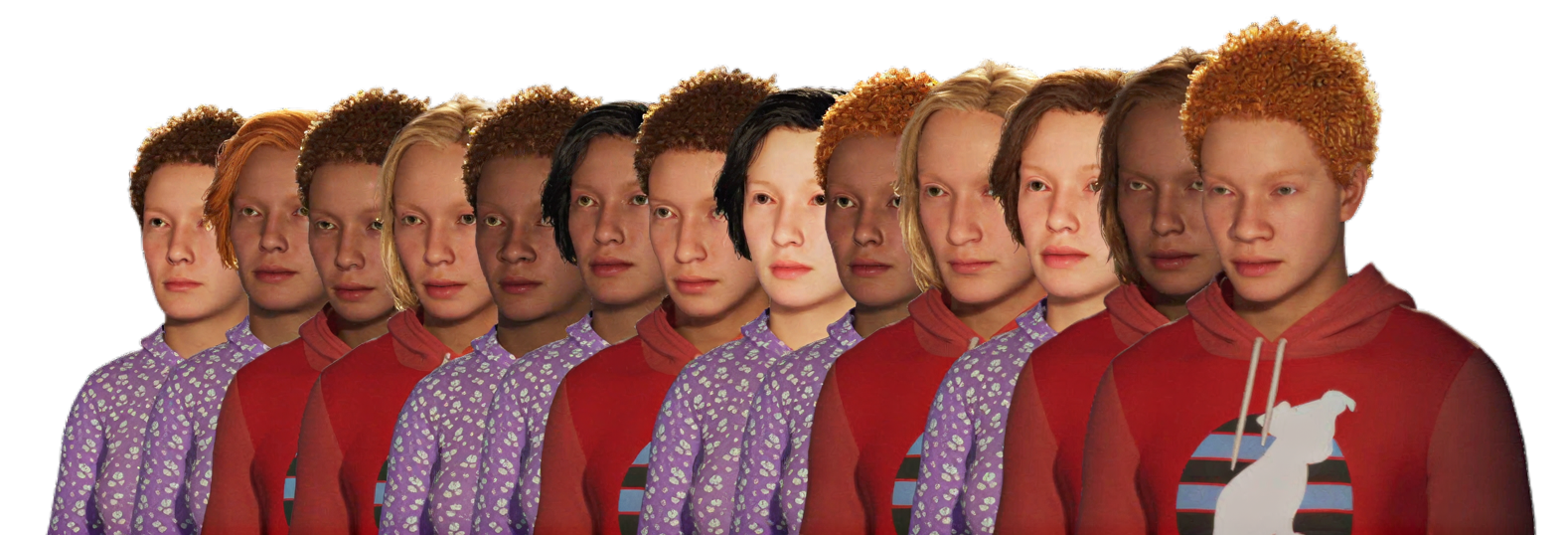
Overview
About MetaGen
MetaGen is a real-time genetic inheritance system for MetaHumans, built for Unreal Engine 5 as a Bachelor's Thesis. Select two parents to generate a wide variety of descendants, with every result still open to final user customization.
Mendelian genetics
Eye color, skin tone, hair texture and hair color follow Mendelian dominance rules.
Real-time morph targets
Facial structure is generated by interpolating segmented morph targets from both parents at runtime.
6 parents, 1 base child
Ships with six pre-configured parent models and a base child mesh.
Built to extend
A documented production pipeline lets you add your own custom parent characters to the pool.
Current scope: MetaGen is a real-time generation and preview prototype. Persistent saving — exporting generated characters and runtime mesh modifications back to editor assets — isn't supported yet; it's the focus of ongoing development.
Runtime Workflow
How it works
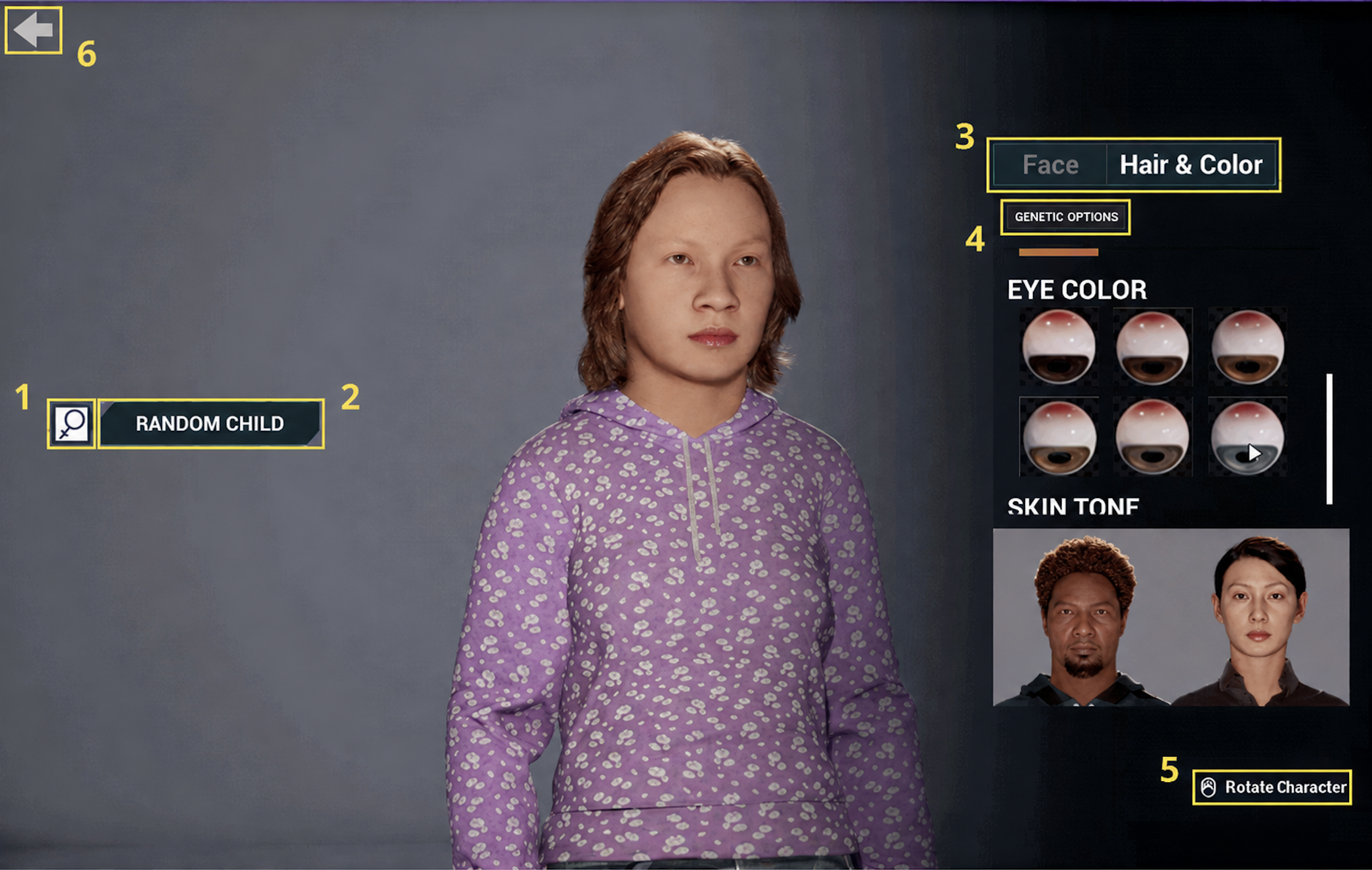
A quick breakdown of the user interface and operation pipeline inside Unreal Engine.
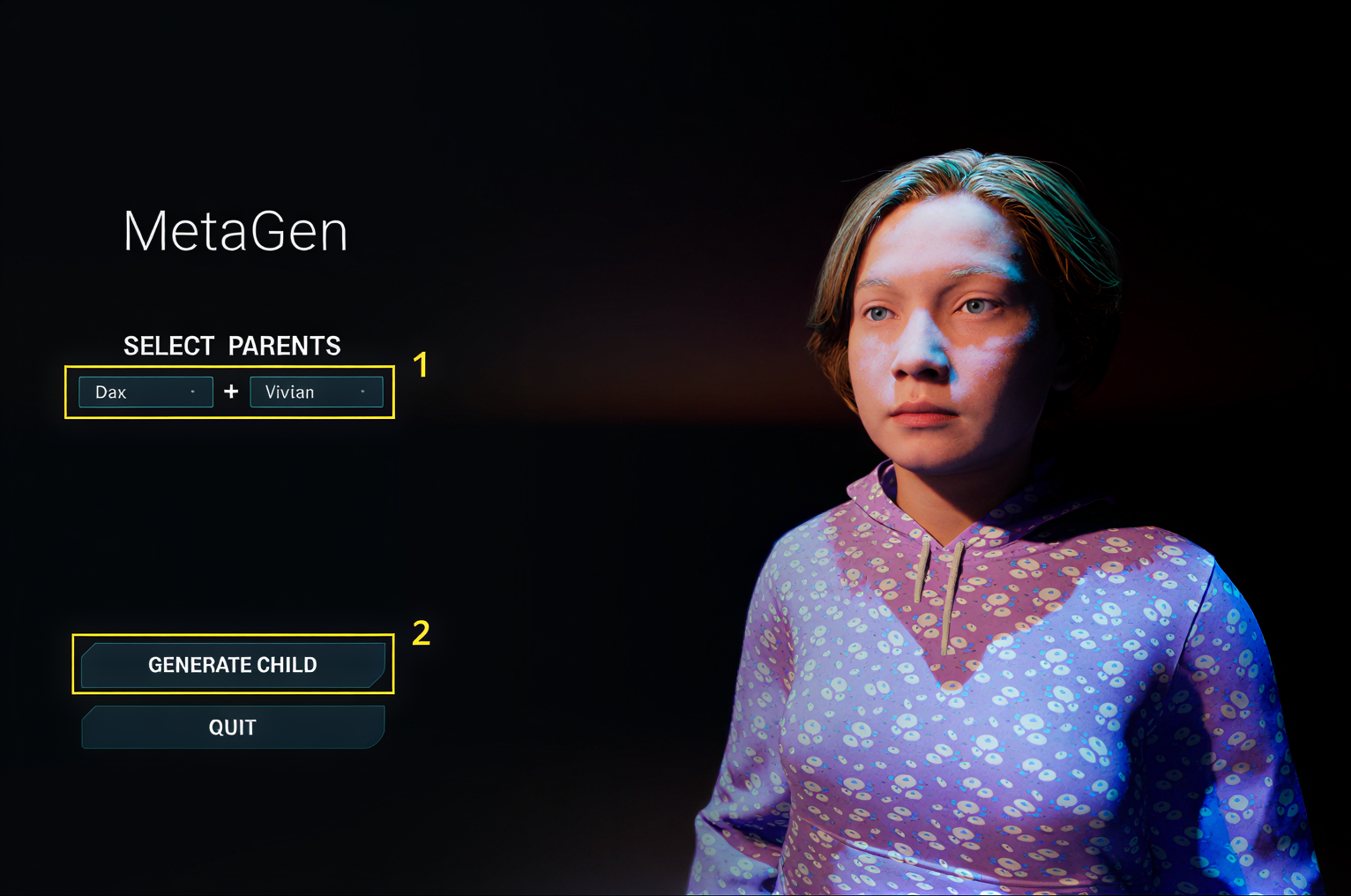
Execute ParentSelection inside the Content folder to start the program.
Development Pipeline
From Blender to Unreal Engine
This one-minute overview summarizes the complete development workflow behind MetaGen, from preparing facial morph targets in Blender to generating procedural descendants in Unreal Engine 5.
For Developers
Integrate your own parent characters
Want to expand the genetic pool? Download the template and follow the accompanying documentation to integrate your own custom parental models. The guide covers the following implementation steps:
Get in Touch
Found a bug? Have feedback?
This is an early prototype, reports and suggestions are genuinely welcome.